The Anti-Tarnish Edit: What Actually Makes Demi-Fine Jewellery Last
If you have ever bought a pretty necklace online only to watch it turn dull, greenish, or patchy within weeks, you already understand why anti-tarnish jewellery in India has become such a popular search term. Between humid summers, sweat, perfume, and daily wear, ordinary fashion jewellery simply cannot keep up with Indian conditions. This is where anti-tarnish jewellery in India changes the game, and this guide breaks down exactly what makes it work, what to look for, and why not all “anti-tarnish” claims are created equal.
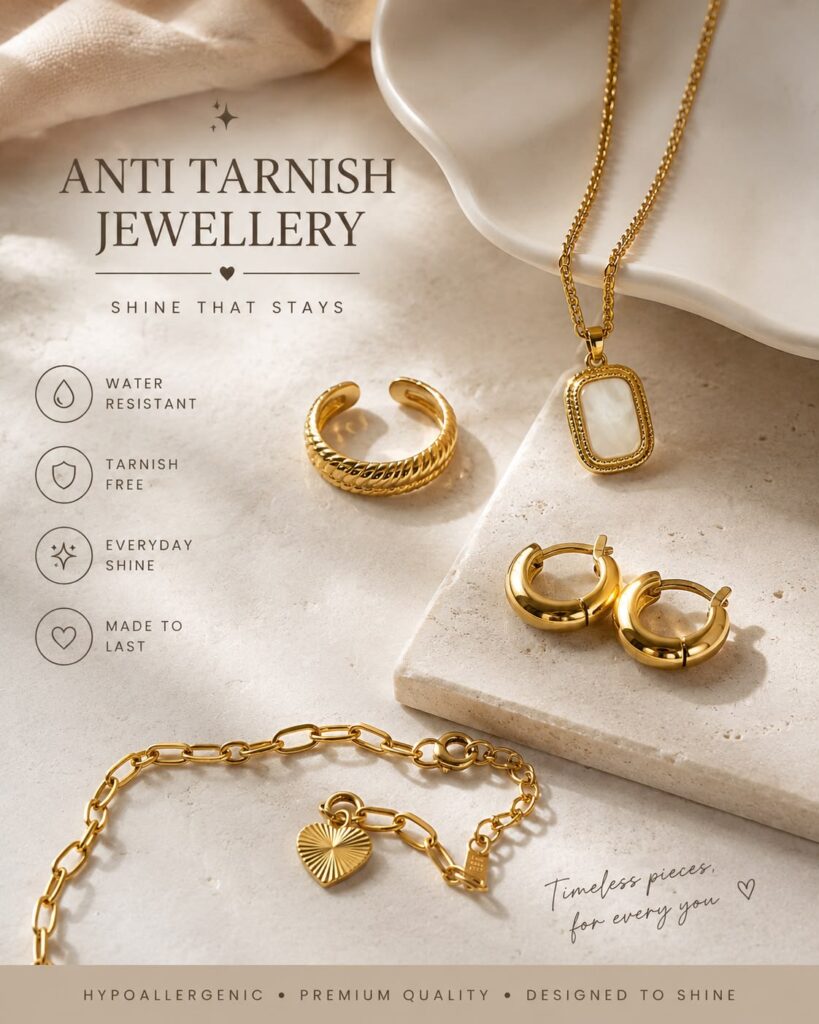
What Does Anti-Tarnish Jewellery Actually Mean
The term anti-tarnish jewellery in India is often used loosely, so it helps to understand what it actually refers to. Tarnishing happens when metal reacts with moisture, oxygen, and sulphur compounds in the air or on your skin, causing discolouration over time. Anti-tarnish jewellery is designed to resist this chemical reaction through better base metals, thicker plating, and protective coatings. Genuine anti-tarnish jewellery in India is built with a base metal like brass or 925 sterling silver, layered with a protective barrier coat, and finished with a precious metal plating that is thick enough to actually last. When brands skip these steps, the piece may look identical in photos but will fail within a month of regular wear.
Understanding 18k Gold Plating
A major part of what makes demi-fine jewellery trustworthy is the quality of its gold plating. 18k gold plating refers to a layer of 18-karat gold, which is roughly 75 percent pure gold, electroplated onto a base metal. This is different from gold-tone or gold-coloured jewellery, which often uses a thin, low-quality coating that fades almost immediately. The thickness of this plating, measured in microns, makes a real difference to how long a piece stays looking new. Reputable demi-fine jewellery brands typically use plating in the range of 1.5 to 2.5 microns, which is thick enough to withstand daily contact with skin, water, and fabric without wearing off quickly. When you are shopping for anti-tarnish jewellery in India, always check whether the brand specifies the plating thickness rather than just using the word “gold plated” as a vague marketing term.
How Tarnish Resistance Actually Works
Tarnish resistance is not just about the outer gold layer; it is about the entire construction of the piece. Quality demi-fine jewellery uses a base metal that does not oxidise easily, combined with a nickel-free or hypoallergenic barrier layer that prevents skin oils and moisture from reaching the metal underneath. This barrier is what stops the greenish tint or blackening that cheap jewellery develops after a few wears. Well-made anti-tarnish jewellery in India is also designed with humidity in mind, since Indian weather ranges from coastal moisture to dry heat, both of which accelerate tarnishing in low-quality pieces. This is why a necklace that performs beautifully in a cooler, drier climate can fail fast once it meets Mumbai monsoons or Delhi summers, unless it has been engineered specifically for these conditions.

How To Spot Quality Before You Buy
Recognising genuine quality is easier once you know what signals matter. Weight is one of the simplest indicators, since well-constructed demi-fine pieces feel substantial rather than flimsy or hollow. The finish should be smooth and even, without visible seams, rough edges, or patchy plating around clasps and settings. Brands that are confident about their anti-tarnish jewellery in India usually mention specific details such as micron thickness, base metal composition, and whether the piece is nickel-free, rather than relying only on the words “premium” or “luxury.” Customer reviews and wear-test photos are also valuable, since they show how a piece actually holds up after weeks or months of real use rather than just how it looks on day one. A trustworthy brand will also be transparent about simple care instructions, because even the best anti-tarnish jewellery lasts longer with a little mindful handling.
Why This Matters For Everyday Wear
The whole idea behind anti-tarnish jewellery in India is that you should not have to choose between wearing your favourite pieces daily and having them last. Demi-fine jewellery exists precisely to bridge that gap between costume jewellery that fades fast and fine jewellery that feels too precious for everyday use. When a piece is genuinely tarnish-resistant, you can wear it to work, through a monsoon commute, during a workout, or to a wedding, without worrying about it losing its shine. That is the entire philosophy behind pieces designed to be worn often and kept for years, not saved for special occasions and forgotten in a box.
conclude
Choosing anti-tarnish jewellery in India does not have to feel confusing once you know what actually determines quality. Look for clear information on base metal, plating thickness, and protective coatings, and be wary of vague claims without any real detail behind them. Demi-fine jewellery, when made correctly, offers the perfect middle ground between affordability and longevity, letting you build a collection that genuinely lasts through Indian weather and daily life.